“It’s not the mountain we overcome but our own limits.” — Sir Edmund Hillary. This short guide establishes a practical tone for wise preparation and pre-trip checks. You will find out how a well-equipped kit ensures off-roaders prepared for common track issues and unexpected delays.
We detail a transparent list of individual equipment, machine preparation, pathfinding, grip, recovery tools, power and lighting, along with cargo essentials. Expect easy-to-follow pointers on matching equipment to terrain and planning daylight windows to save time and remain safe. – Discover more about ATV parts
Brought to you by American Off-Roads, your trusted U.S. parts supplier and community resource, this guide explains which items earn space in your rig and which items you can leave behind. Continue reading to ensure every adventure more confident and streamlined.
Trail Prepared: What Is Included In This Off-Road Safety Guide
Before you head out, know which checks and gear sets render a trip dependable and safe.
This brief list covers the key areas to inspect, ensuring nothing is left back at the garage or buried in an inaccessible box.
The guide focuses on essential systems affecting your ride’s reliability and comfort. That includes protective gear, first aid, visibility, and machine upkeep.
- Navigation and communication: use offline GPS with printed maps for remote terrain.
- Tires and traction: bring repair strips, spare, pump, and deflators for sand or boulders.
- Rescue gear: straps, connectors, and hand protection to self-rescue without extended delays.
- Electricity and illumination: organize mounting and energy usage to avoid straining wiring.
| Category | Critical Parts | Sourcing |
|---|---|---|
| Safety Gear | Headgear, handwear, eyewear | American Off-Roads, authorized sellers |
| Fixes | Repair strips, pump, air-down tool | Specialized stores, web shops |
| Rescue | Tow ropes, D-rings, trunk protectors | Manufacturer stores, American Off-Roads |
By connecting gear to real-world scenarios, this guide ensures your vehicle handles various terrains and trip lengths well. Adopt this method for fast, repeatable prep that upgrades every ride.
The Essential ATV Off-Road Checklist
Pack intelligently: a staged grab-and-go kit trims preparation time and maintains critical items within reach.
Personal Protection
Begin with approved helmets that meets safety standards. Add clear and tinted eyewear for shifting conditions and breathable gloves with reinforced palms and knuckles.
Add fitted body armor to lower fatigue and impact on longer rides.
Vehicle Prep And Systems
Check levers, steering feel, brakes, and acceleration before leaving. Scan oils and coolants and look for leaks.
Equip a compact jump pack with reverse-polarity protection; many double as device power banks. Confirm lamps are aligned and note additional power draw from added lights.
Must-Haves For The Trail
Layer pathfinding with an non-internet unit and a marked paper map for redundancy.
Carry a small tool set: wrenches, screwdrivers, tape, repair strips, spare tire, air pump, and deflators. Bring recovery straps, connection hardware, and a pulling system if supported.
Store water and food in easy-access compartments so you can access them without digging.
| Group | Key Items | Why it matters | Storage Location |
|---|---|---|---|
| Personal | Helmet, goggles, gloves, body armor | Lowers injury risk and overheating | Marked bag in cabin or bed |
| Power & Lights | Jump pack, spare bulbs | Stops dead batteries and keeps vision clear | Secure box or soft case |
| Fix & Rescue | Tool roll, tire plugs, straps, shackles | Enables quick fixes and self-rescue | Weatherproof storage bag |
| Navigation & Comm | GPS unit, physical map, radios | Maintains group contact without signal | Dashboard pouch or front-row storage |
American Off-Roads makes it easy to build and tag storage by type so you can take your kit and save time on packing day. An organized system improves on-trail safety and gets you back to driving faster.
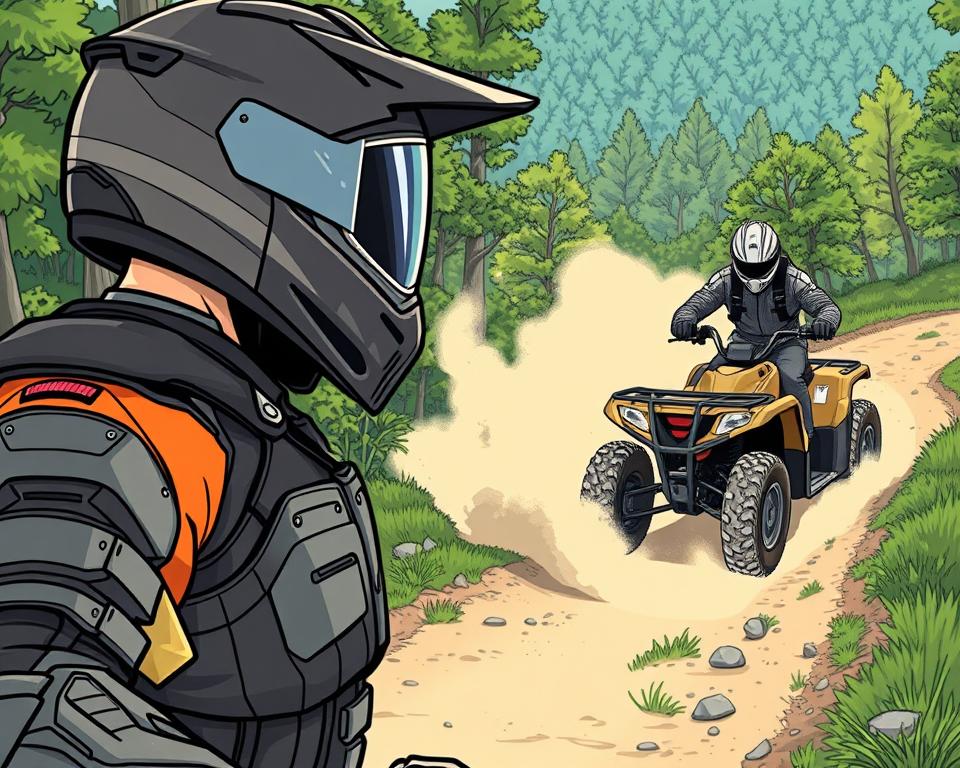
Safety Gear To Protect Against Elements And Crashes
Quality protective gear lets you ride further and reduces injury risk when trails get rough.
Begin with a helmet that passes DOT, Snell, or ECE standards and fits tight. Select one with good airflow, a sweat-absorbing liner, and large viewports so sight remains unobstructed over changing ground.
Pick handwear that mix padded grip areas and armor with vented sections. This keeps your fingers protected from debris and vibration while stopping overheating on extended rides.
Layer a membrane suit for rain and wind protection, and wear UV-protection undershirts for warm days. A snug balaclava shields against grit while vents help airflow and reduce temperature rise.
Pair footwear to the trail: wellington style for easy cleaning, hiking boots for grip and stability, and wading systems for deep mud. Confirm treads release dirt and provide enough stiffness for footpeg control without losing pedal feel.
| Item | Key features | Best for | Maintenance |
|---|---|---|---|
| Helmet | Certified safety, airflow, wide view | All-day trail riding | Swap after crash; wash pads often |
| Handwear | Padded palms, armor, vented | Guards hands from rocks and shake | Check stitching; follow wash tags |
| Boots | Grip soles, ankle support, mud-shedding tread | Wet crossings, rocky or mixed terrain | Dry completely; condition leather |
Check body armor plates and stitching often so safety capability remains intact. American Off-Roads can outfit you with matching kits that mix ventilation, dryness, and impact resistance for your style of riding.
Nav And Comms: Charting The Path And Keeping Contact
Multiple pathfinding aids assist you to stay on permitted routes and return on schedule.
Select a rugged, offline-capable unit with long battery life to guide routes, save spots, and save your parking spot for an simple return. A durable device will resist dust and vibration so it survives across rough ground.
Always pack a weather-resistant, durable physical chart and a direction finder as fail-safes. Mark your intended trail and alternate exits from a Forest Service or park map so you can find your way if tech fail.
Radio Protocols And Checks
Equip each team with water-resistant two-way radios and agree on frequencies and handles before you roll. Perform a quick comms check so everyone knows the call-in protocol if visual contact is broken in forests.
- Mark coordinates for gas, camps, and rendezvous and distribute them with the team.
- Create time buffers for slow sections, photo stops, and obstacles to protect your schedule.
- Keep a printed contact list with emergency numbers and park offices for quick assistance.
| Item | Significance | Advice |
|---|---|---|
| Offline GPS | Shows way, saves location | Bolt down; use hardwire power kits |
| Paper map & compass | Backup for dead batteries | Mark route and alternates before departure |
| Radios | Team talk in bad signal zones | Rugged units with extra power |
Align your digital and physical plans with permitted tracks and closed areas to avoid dangerous routes or tickets. We can assist select brackets and holders that keep devices safe without blocking the cockpit.
Tire Management And Traction Tools For Every Surface
A good tire plan keeps you moving when loose terrain attempts to halt you.
Bring a backup wheel that equals dimensions and strength. Stow plugs, a repair tool, stems, and caps so you can do quick field fixes.
Bring a compact pump and a trustworthy pressure checker to adjust correct pressures for every terrain type. Sand frequently runs best at 5–6 PSI, while stones and dirt need increased settings.
- Store traction boards or mats where they’re easy to reach to unstuck stuck wheels in soft ground.
- Keep gear and spares in labeled boxes so gear does not rattle or disappear.
- Inspect sidewalls pre-ride and anticipate swapping if damage show up.
| Gear | Function | Fast Advice |
|---|---|---|
| Spare tire & plugs | Repair flats or swap wheels | Match load rating; store upright in a secured mount |
| Compressor & gauge | Dial in PSI for sand, rock, or hardpack | Choose compact units with good flow rate |
| Recovery boards & air-down tools | Unstick tires and drop pressure quickly | Store boards by exit; mark air tools |
Record PSI changes and surfaces during each ride to create a helpful reference. Train your group on safe lift spots for your machine so fixes happen easily and safely.
American Off-Roads can package tire repair gear, small pumps, and air tools so everything lives in one labeled container in your rig.
Rescue Gear: Winching, Strapping, And Hardware For Recovery
Good rescues begin with gear selected for your vehicle and rehearsed by the crew.
Select a winch capable of at least 1.5x your rig’s mass and verify bracket solidity and wiring. Align capacity to load so pulls remain safe and controlled. American Off-Roads can pair pulling power and suggest parts and accessories that suit your vehicle the correctly.
Winch Buying And Anchor Safety
Utilize trunk protectors when anchoring to trees and maintain pull angles low. Inspect anchor options in soft terrain prior to connecting. Walk the stuck zone to locate firm ground and establish a safe path out.
Tow Straps, D-Rings, And Recovery Shackles
Pack certified snatch straps, soft shackles, and D-rings matched to your rig. Soft shackles reduce harm to points and speed connection. Keep steel shackles in a rigid bag so they don’t become hazards in the cab.
Clever Accessories For Safer Recovery
Add a line damper and a heavy blanket to lower whip danger if a line fails. Bring tough safety gloves to protect hands from sharp wires and heat. Remember a hoist also helps load a broken quad on a trailer or clear trees blocking the way.
| Item | Why it matters | Quick tip |
|---|---|---|
| Winch (1.5x vehicle) | Pulls stuck rigs; helps load trailers | Check bolts/wires; test at home |
| Ropes & links | Flexible, fast connections | Use certified soft links; no DIY rigging |
| Protector & weight | Saves trees; stops line whip | Wrap trees carefully; weight the line |
Power, Illumination, And Emergency Gear
A compact power plan and a small emergency kit prevent minor glitches from turning into major ordeals.
Carry a modern battery jump-starter with spark-proof clamps and safety circuits. Most models also power phones and GPS devices so you maintain comms alive.
Plan lights in areas: front spot/flood for range, ditch lights for peripheral hazards, and rear work lights for repairs. Figure out amp load and add fuses to guard your vehicle system and stator.
- Keep a jump pack in an accessible spot so you grab it quickly when needed.
- Mount controls in easy reach and label each for fast night use.
- Shield wiring with sleeving at pass-throughs to stop chafe and damage.
- Check the battery pack and lights in the garage—simulate a flat battery and rehearse safe hookups.
Assemble a compact emergency kit with medical supplies, a compact extinguisher, multi-tool, whistle, and thermal blankets. Include chem lights or a strobe for being seen if you stop trailside after dark.
| Item | Importance | Location |
|---|---|---|
| Jump pack | Restores charge; powers devices | Easy pouch or dash box |
| LED pods & switches | Targeted illumination, low draw | Marked switches |
| Safety kit | Stabilizes incidents until help | Accessible bag by door |
Our specialists can help select electrical parts so added lights and a jump pack integrate cleanly with your packing layout and existing systems for safe, reliable trail use.
Smart Packing: Gas, Fluids, Cargo, And Tips From American Off-Roads
Smart loading equalizes weight, reachability, and safety so sudden weather or waits don’t ruin a ride.
Carry extra gas and fluids in purpose-built containers and mount them low down to keep center of gravity while riding rough sections. Secure fasteners and vents to prevent spills and fumes near the cab.
Use high-energy snacks and a hydration bladder so you drink often and keep up stamina. Stack apparel for changing temps; pack a thin insulating layer in a waterproof sack.
Protect Gear And Bodywork
Choose rigid boxes or soft panniers built not to gouge bodywork. Fit separators and clear pouches so tools, bits, and meds remain organized and easy to find.
- Place often-needed gear up front for fast reach.
- Bring a notepad to track fuel mileage and thirst for smarter refill scheduling.
- Stash a garbage sack and a small courtesy kit—tissues, sunblock, spray—to maintain camp clean and riders happy.
| Item | Why it matters | Packing Tip |
|---|---|---|
| Fuel & water containers | More miles; stops thirst | Low, secured mounts with vent protection |
| Soft bags / panniers | Protect gear without scuffing panels | Use padded straps and body-friendly contact points |
| Hydration bladder & food | Consistent fluid intake; quick energy | Run hose for hands-free drinking |
American Off-Roads can outfit vehicles with lockable, dustproof storage, proper fuel/water containers, and luggage that won’t scar plastics. That helps save components and keeps equipment ready for any adventure.
Conclusion
Complete your prep by confirming critical systems, staged gear, and simple backups so your ride goes smoother. This brief guide assists you to turn preparation into a reliable routine for safer, enjoyable off-roading.
Prioritize protection that fits and breathes. Have power spares, lighting plans, layered navigation with a physical chart, rescue tools, and tire repair tools accessible.
Refresh supplies and schedule replacement for old components. Run quick controls checks and a rapid inspection to spot minor problems before they grow into stoppages or harm.
Organize cargo, protect plastics and frame from grime, and tweak air and tool layouts until the whole setup flows. To get the right parts and setup help, American Off-Roads is ready to equip your vehicle for the next trip.